
Limited Color Palettes Make Your Art BETTER!
Welcome back to my YouTube/Blog series, Mixed Media 101, where I talk about everything foundational to my mixed media art practice. Today's subject, a Limited Color Palette, is near and dear to my heart because it is (I believe) so important to how and why I found my groove with mixed media art.
You can enroll in the FREE course Mixed Media 101 and become a part of the community of makers in Willa Workshops right here:
For all things Willa Workshops, and lots of FREE gifts, click here!
Why You Should Try a Limited Color Palette in Your Artwork
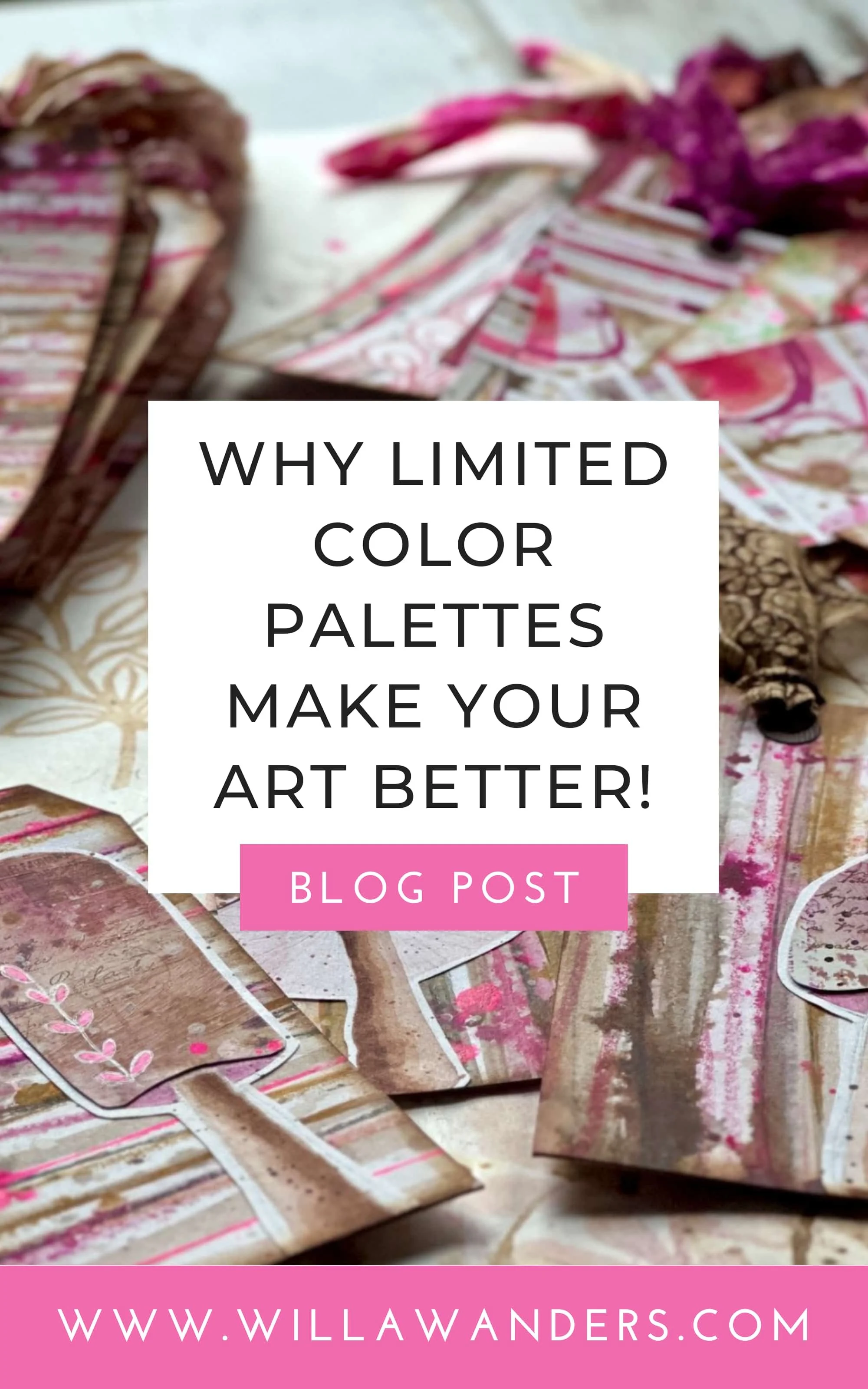
If you've ever felt overwhelmed choosing colors for a painting or mixed media project, working with a limited color palettemay be the solution. Many professional artists intentionally use fewer colors because it creates stronger, more cohesive artwork while making the creative process easier and more enjoyable.
Here are six reasons why limiting your color palette can improve your art.
1. Create Stronger Visual Unity
One of the biggest benefits of using a limited color palette is that it naturally creates a sense of harmony. Because every color in your artwork is related, the finished piece feels cohesive and balanced. Instead of competing for attention, your colors work together to support the overall composition.
2. Improve Composition, Value, and Storytelling
When you aren't focused on choosing from dozens of colors, you can devote more attention to the elements that make artwork compelling—composition, contrast, value, lighting, and visual storytelling. A limited palette encourages you to think intentionally about how color supports your design rather than relying on color alone.
3. Achieve Beautiful Color Harmony
Many artists struggle with colors that feel disconnected or clash with one another. A limited palette makes color harmonymuch easier to achieve because every mixture comes from the same small group of colors. The result is artwork that feels intentional, unified, and visually pleasing.
4. Spark Greater Creativity
Creative limitations often lead to creative breakthroughs. When you have fewer colors to work with, you'll naturally begin mixing new shades, experimenting with tints and tones, and discovering combinations you may never have considered otherwise. Limiting your palette encourages problem-solving and often leads to more unique artwork.
5. Save Time, Money, and Decision Fatigue
Working with fewer art supplies doesn't just simplify your process—it also saves money. Instead of buying every new paint color or art medium, you learn to get the most from the materials you already own. With fewer choices, you'll spend less time deciding and more time creating.
6. Develop Your Own Artistic Style
Many well-known artists are recognized by the colors they consistently use. Over time, a limited color palette can become part of your artistic identity, helping your work become instantly recognizable. Developing a signature palette is one way to create a consistent body of work that reflects your personal style.
The Bottom Line
Using a limited color palette isn't about restricting your creativity—it's about strengthening it. Whether you create mixed media art, acrylic paintings, art journal pages, or collage, choosing fewer colors can help you create more cohesive, harmonious, and intentional artwork while making the creative process less overwhelming.
Watch the video here!
Tell me, do you work with a limited color palette or does the thought of narrowing down your color choices make you break out in a cold sweat? What are your favorite colors?