
The Definitive Guide to White Pens (Types, Care, Storage & Favorites)

How to Care for White Pens (and Bring Them Back to Life)
If you've ever fallen in love with a white pen only to have it suddenly stop working, you're not alone. In fact, it's probably the number one complaint I hear about white pens.
The good news? Most white pens don't stop working because they're empty. More often than not, they simply need a little maintenance.
White ink is different from other colors. Most white paint markers and gel pens contain titanium dioxide, a very heavy white pigment that naturally settles over time. That settling, combined with paint drying in the nib, is what causes most of the skipping, clogging, and frustration we experience.
Before you toss a pen into the trash, try these simple steps. You may be surprised how many "dead" pens can be brought back to life.
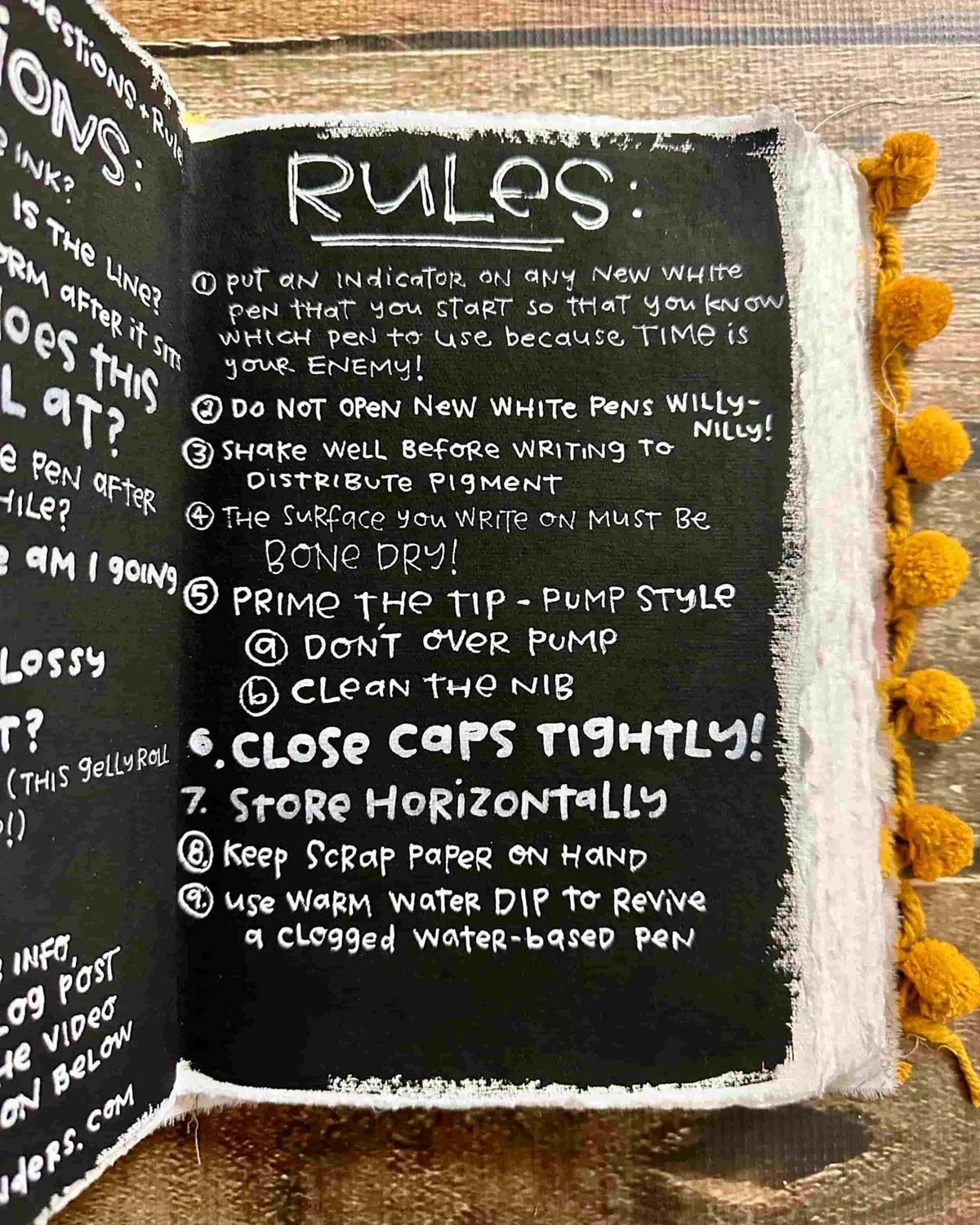
Step 1: Shake the Pen Thoroughly
This is the most important thing you can do.
Most acrylic paint markers contain a small mixing ball inside the barrel. Before every use, shake the pen vigorously for 30 to 60 seconds. You should hear the mixing ball rattling freely as it redistributes the pigment throughout the paint.
If you don't hear the ball moving, gently tap the barrel with your fingernail to loosen it before shaking again.
Skipping this step is one of the most common reasons white paint markers perform poorly.
Step 2: Prime the Pen
If your marker has a pump-style tip, press the nib gently up and down on a piece of scrap paper until fresh paint begins flowing.
Be patient. It may take several pumps before the paint reaches the nib.
At the same time, avoid over-pumping. Too much pressure can flood the tip with paint, creating blobs instead of smooth lines.
Step 3: Clean the Nib
If your pen still isn't writing well, the tip may simply be clogged with dried paint.
For acrylic paint markers such as Posca, Molotow, or Sharpie Creative Markers, remove the nib if it is designed to be removable. Soak it in warm water for 10 to 20 minutes, rinse until clean, and gently wipe away any remaining paint with a soft cloth or your fingers.
Allow the nib to dry slightly before replacing it in the pen, then shake and reprime the marker.
If you're using a pigment ink or gel pen, avoid soaking the entire nib. Instead, dip only the tip into warm water for a minute, wipe it clean, and scribble on smooth paper until the ink begins flowing again.
Step 4: Flip the Nib
This is one of my favorite tricks.
Many acrylic paint markers have reversible nibs. The end inside the pen has never been exposed to air, so it's often perfectly clean.
Simply pull the nib out with tweezers or your fingers, turn it around, reinsert it, and reprime the marker.
It's amazing how often this gives you what feels like a brand-new pen.
Step 5: Store Your Pens Properly
How you store your pens matters more than most people realize.
For most paint markers and gel pens, horizontal storage helps keep the pigment evenly distributed and reduces the chance of the tip drying out.
Always replace the cap immediately after use. Acrylic paint dries surprisingly quickly, and even leaving the cap off for a few minutes can begin drying the nib.
One simple habit that can dramatically extend the life of your pen is to wipe the nib with a damp paper towel before replacing the cap. Removing fresh paint from the tip helps prevent buildup and clogging.
Use the Right Cleaner
Different types of white pens use different types of ink.
Water-based acrylic paint markers: Clean with warm water.
Alcohol-based markers: Clean the tip with isopropyl alcohol.
Oil-based paint markers: Use mineral spirits or the cleaner recommended by the manufacturer.
Using the wrong solvent can permanently damage the pen, so when in doubt, check the manufacturer's instructions.

Sometimes It's Time to Let Go
Even the best white pens eventually wear out.
If you've shaken the pen thoroughly, cleaned the nib, flipped it around, reprimed it, and it still refuses to write, it has probably reached the end of its useful life.
That's okay.
One of the biggest mindset shifts I've had over the years is realizing that white pens are consumable art supplies. They're much like sewing machine needles, X-Acto blades, or paintbrushes. They aren't designed to last forever.
Once I stopped expecting every white pen to perform perfectly for years, I stopped feeling disappointed when one finally wore out.
There Is No Perfect White Pen
I've tested more white pens than I care to admit, and here's the conclusion I've come to:
There is no perfect white pen.
Every pen has strengths and weaknesses. Some produce incredibly opaque lines but clog more easily. Others write beautifully on smooth paper but struggle over textured acrylic paint. Some excel at tiny details, while others are better suited for bold highlights.
Rather than searching for one magical pen that does everything, I've found it's much more useful to keep several favorites in my studio, each suited for a different purpose.
That simple shift in expectations has made white pens far less frustrating—and much more enjoyable to use.
My Favorite White Pens
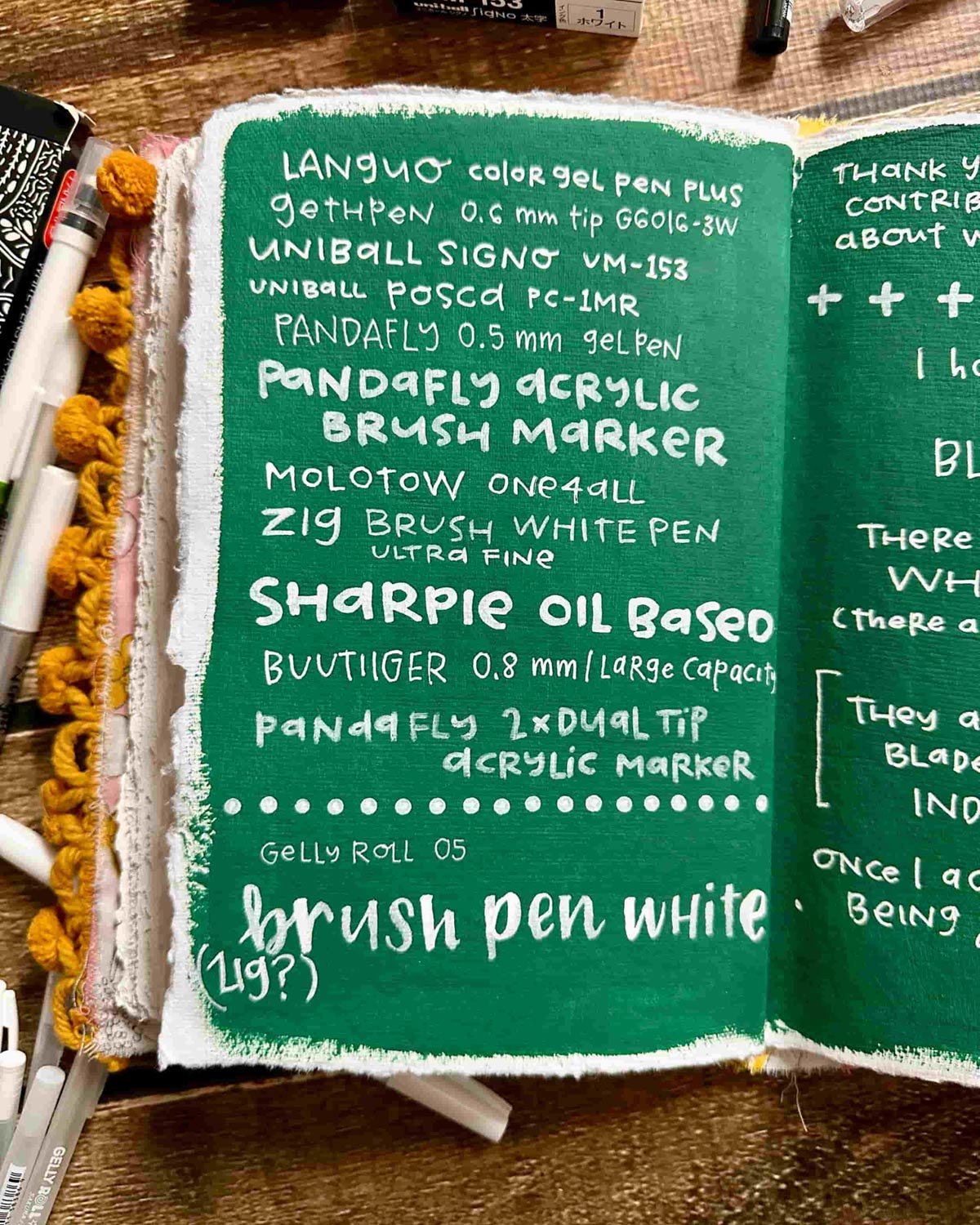
If you're looking for dependable options, these are the white pens that have consistently earned a place in my studio:
Uniball Signo White Gel Pen UM-153
Molotow All4One
Sharpie Oil Based
Like every white pen, each has its strengths and weaknesses, but they've proven to be the most opaque and reliable enough in my experience.
Looking for my YouTube Video on this subject? https://youtu.be/4gWfVmLiEXE
Do you want to get really confident with your hand lettering? https://www.willawanders.com/love-your-imperfect-letters
Have I missed one of your favorites? I'd love to hear which white pens you keep reaching for—and any tricks you've discovered for keeping them working their best.